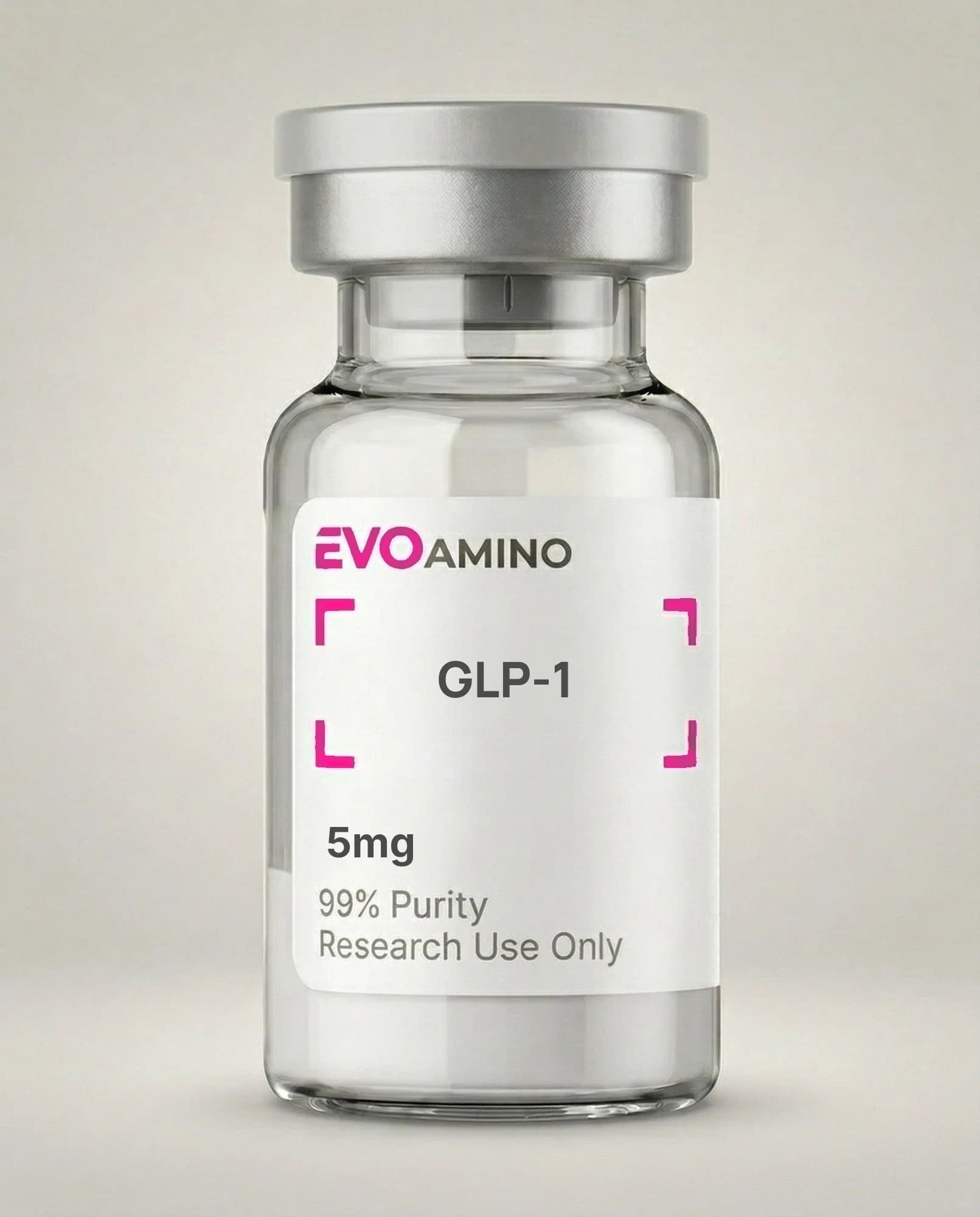
GLP-1.
GLP-1 (glucagon-like peptide-1, 7-37) is the biologically active form of the endogenous incretin hormone glucagon-like peptide-1, derived from proglucagon cleavage. With the molecular formula C₁₅₁H₂₂₆...
Lab Verified
Clinical Grade
PMID Cited
Mechanism of Action.
Published preclinical research has characterized the following molecular pathways and receptor interactions for GLP-1.
GLP-1 Receptor
Published research demonstrates GLP-1 modulates targeted signaling cascades within cell tissue models.
Gs-protein coupled signaling
In cellular environments, GLP-1 exhibits selective binding and corresponding pathway activation.
Clinical Literature
Research review on GLP-1 molecular characterization.
Preclinical studies have characterized the molecular properties and receptor binding profiles of GLP-1 in standardized assay systems.
GLP-1 structure-activity relationship analysis.
Structure-activity relationship studies have examined the functional domains and binding characteristics of GLP-1 in cell-free and cell-based systems.
RESEARCH USE ONLY: This compound is intended exclusively for in vitro laboratory research. Not for human or veterinary use. Not intended to diagnose, treat, cure, or prevent any disease. Not evaluated by the FDA. Must be 21+ to purchase.
Related Compounds.
 Metabolic
5-Amino-1MQ
$36.00C10H11N2 (free base) · 159.21 g/mol (free base)
For in vitro research use only. Not for human consumption.
 Metabolic
AICAR
$57.00C9H14N4O5 · 258.23 g/mol
For in vitro research use only. Not for human consumption.
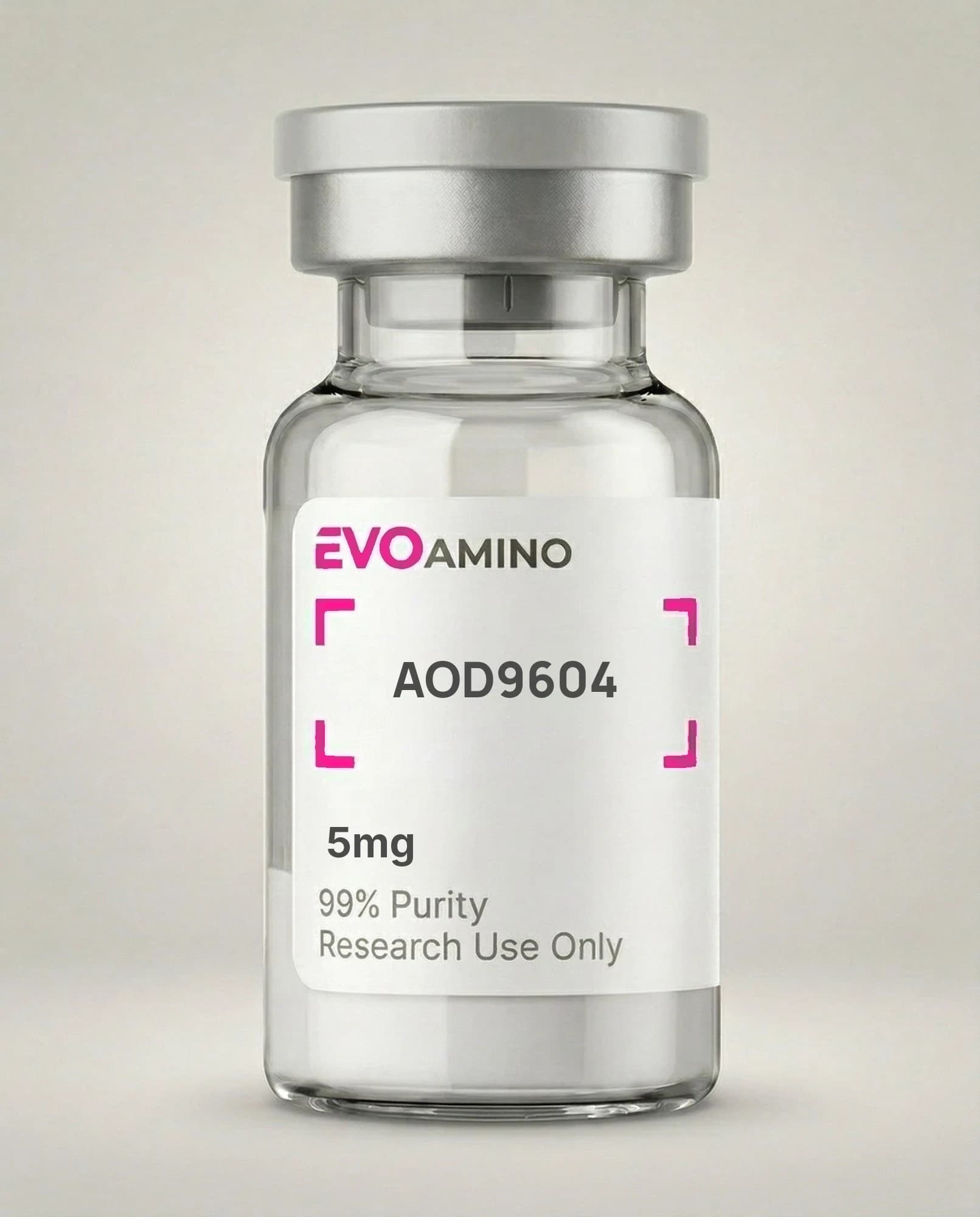 Metabolic
AOD9604
$48.00C78H123N23O23S2 · 1815.12 g/mol
For in vitro research use only. Not for human consumption.
Related Research & Analysis
GLP-1 Sequence, Molecular Weight, and Structure: A Reference FAQ
GLP-1 (7-37) is a 31-residue peptide, HAEGTFTSDVSSYLEGQAAKEFIAWLVKGRG, with the molecular formula C₁₅₁H₂₂₆N₄₀O₄₆ and a molecular weight of 3337.73 g/mol (CAS 106612-94-6). Twelve reference questions on its sequence, the 7-36 amide variant, proglucagon processing, DPP-4 cleavage, fusion proteins, and how analogs change the mass. For research purposes only.
BPC-157 vs GLP-1: Structural Classes, Mechanisms, and Research Applications Compared
A head-to-head structural and mechanistic comparison of BPC-157 and GLP-1 across their distinct research classes, receptor biology, and documented in vitro applications. For research purposes only.
How GLP-1 Receptor Binding Is Measured: Assay Methods and Their Limits
Radioligand binding, fluorescence polarization, surface plasmon resonance, BRET, and structural methods each answer a different question about receptor engagement. What each measures, what Kd and competition data establish, and where the methods disagree. For research purposes only.